top of page

URBAN DISPLACEMENT
Much of my historical work has examined what happens when cities decide that some places must disappear in the name of progress. In Tucson, the power of eminent domain was used to take property and displace Mexican American communities for urban renewal, freeway construction, and other public projects. My research looks at what was destroyed, but it is also driven by what happened to the people whose homes, businesses, and communities once occupied those places.

1948 advertisement urging Tucson voters to oppose the proposed freeway and the displacement of residents from their homes. From In the Shadows of the Freeway, p. 54. Originally published in the Tucson Citizen, June 7, 1948, p. 25.
Urban Renewal

Aerial view of downtown Tucson showing the Pueblo Center Redevelopment Project area.
La Calle: Spatial Conflicts and Urban Renewal in a Southwest City
On March 1, 1966, Tucson voters approved the Pueblo Center Redevelopment Project, Arizona’s first major urban renewal project. It targeted eighty acres in Tucson’s historic, predominantly Mexican American downtown, an area most called “la calle.” For close to a century, tucsonenses had created their own spatial reality there, living, working, and celebrating their culture. Urban renewal displaced residents and demolished their neighborhoods to make way for the Pueblo Center.
Freeway Construction

José María Tapia Jr. was one of the children who died as a consequence of gravel pits excavated for rock and sand used to make concrete for freeway construction and suburban development. My brother José Luis died in a nearby gravel pit.
In the Shadows of the Freeway:
Growing Up Brown & Queer
Growing up about 200 feet from Interstate 10, I witnessed the effects of the freeway, built in the late 1940s and steadily expanded through 1973. It demolished homes and increasingly isolated a working-class barrio of brown residents from the rest of the city. Freeway construction brought more than traffic noise and sirens. It introduced environmental hazards, altered school boundaries, and shaped the lives of families who had to cross it or live near it. The freeway became an obstacle as well as a barrier. In the Shadows of the Freeway combines memoir, family history, and archival research to examine its immediate effects and long-term consequences.
Maria Cordova's Casa
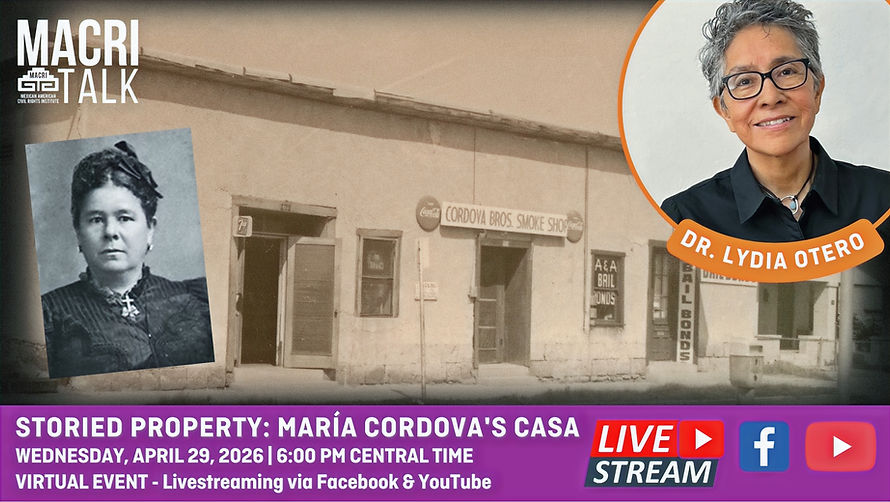
Storied Property: María Cordova’s Casa returns to the history of Tucson’s urban renewal through one adobe house that survived the Pueblo Center Redevelopment Project. While surrounding homes and businesses were demolished, María Cordova’s house remained. The book examines not only what urban renewal destroyed, but what survived and why.
A 2026 virtual presentation uses slides, images, and archival materials to explore some of the book’s central arguments and is available to watch watch on YouTube.
bottom of page